Sunday, May 12, 2013

Top Ten Animal Moms!

In honor of Mother's Day, I thought I would look into the world of nature the next couple of days, & nominate a top ten list of "Animal Moms." Hope Ewe enjoy my findings on this very special day that we use to honor our Moms. On a personal note, I lost my Mom on Feb. 1st, 2004, & truly appreciate how she loved her sons. She was feisty, wise, generous, & truly embraced my family & me with a Mother's love! She is missed, loved, & her thumbprint on our lives will always be recognizable & remembered!
Bath time is so much FUN!


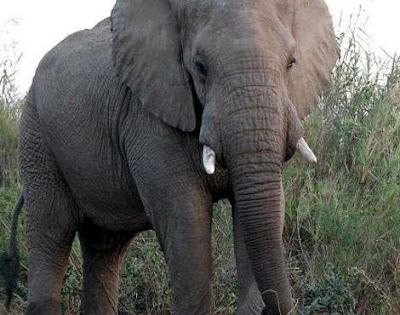
I'm one of the "Biggest" mothers on the planet.
We are the "Allomothers", & we know how to raise calves!
The African elephant is a great nominee for the "Top Ten" list of Animal Moms. She has to endure a 22 month pregnancy before
giving birth to a 200 lb. blind baby! OUCH! Fortunately, she has help caring for the "little" darling, for the ladies of the herd assist her in raising the calf,  In their matriarchal society, a group of females known as "Allomothers," help babysit the young calf, giving Mom a much needed break. It truly does take a village!

It takes "Gusto" to be a Mom in these temperatures!
Aren't I the cutest thing since "sliced bread"?
I'm exhausted but I still have a "COOL" family!
Polar bear Moms are also on my "Top Ten" list of Super Moms! They have to put on about 400 lbs. of baby weight, or their body will reabsorb the fetus! She will dig herself a "maternity" den, most likely in the snow, where she will hibernate & deliver her baby in her sleep! She also goes without food for the entire 2 months, waking to hungry cubs that are toothless, blind, & adorable. She will stay with the cubs for 2 years before they leave to be on their own.
I really do Like being a MOM! It is, what it is!
Say good-bye to the next 2 years while I root for the "Cubs!"
Mommy, We're HUNGRY!
Cheetah Moms make my "Top Ten" list due to their phenomenal patience. In due time, Cheetah Moms give birth to a litter of 4-6 cubs. These cubs need to be taught "survival" skills, which involves avoiding predators & capturing prey. This training takes up to 2 years, before the cubs are fully equipped & ready to venture out on their own. Males will hang together, but females tend to wander off & disperse.
We stick together like peanut butter & jelly!
Bighorn Sheep Moms bond very closely with their young right after they are born. The Mom proceeds with a thorough "licking" of the lamb, or "Owning" of it. This licking not only dries the lamb, but also protects it & fosters further bonding between Mom & lamb. Lambs stay close to Mom for about a year following.

Bonding with my "Kid" is a "HIGH" calling!

Best wishes & congratulations to all Moms.Ewer love, care, & nurturing, all make the world a better place! Blessings to all!

"Charm is deceitful & beauty is passing, but a woman who fears the Lord, she shall be praised." Proverbs 31:30


Friday, May 10, 2013

Mandrill Monkey Business!

Mandrills are one of the most colorful mammals living in the rain forests near equatorial Africa. Their red & blue faces, & colorful rumps, can't be mistaken. These shy primates are considered the largest of all monkeys, weighing between 25-60 lbs., & standing at 22-32 inches tall.They have a lifespan of 20 years in the wild  & up to 40 yrs. in captivity.
This is a face that Ewe could become very envious of!
Can Ewe tell that I'm not very "Happy" with Ewe?

Adult male Mandrills display the most brilliant colors of blues, reds, golds, & lavenders, both on their faces & on their furs. The brighter the male's colors, the more attractive they are to the females, which are characteristically one-half the size of males.
They live in groups known as "troops", consisting of up to 20 Mandrills. A dominant alpha male leads the troop, which also hosts a dozen females & all their young. At times, they will join with other "troops", forming a larger group of up to 200, when food is available. 


Being an alpha male is a great deal of pressure!
Being part of a "troop" offers real protection in the forest!
Mandrills are omnivorous & are primarily terrestrial monkeys, foraging mostly on the ground for their food. Their diet consists of seeds, fruits, roots, amphibians, insects, reptiles, & small animals. Their long arms help them to move well on the ground & also assist them in locating "sleeping quarters" in the trees at night. Mandrills have been equipped with cheeks that have large pouches, enabling them to store a "carry-out" meal for late night munchies. Mandrills also eat a variety of veggies, melons, raisins, popcorn, & peanuts while in captivity. 
Ewe would be wise to stay away while I'm eating!
This is "un-be-LEAF-able"! Delicious!
I'm omnivorous, which means, "I can eat it all!"
Mandrills communicate like most monkeys, through vocalizations,  body language, scent markings, & the friendly flashing of their canine teeth, which is similar to grinning within the "troop". Their canines are over 2 inches long, & they will use them in defense of the "troop".  Females give birth to one infant weighing 1-2 lbs. at birth, which clings to the mother's belly. As the infant grows heavier, it will eventually ride its mother's back. (Happy Mother's Day.) Females give birth approximately once every 18 months.
I don't look like much now, but just wait!
I'm not fooling around! Ewe are not welcome here!
I need my Mommy! I'll be more colorful later in life!

Sheep are not as colorful in the face as Mandrills, yet they have the distinction of having a variety of breeds that are rather unique.
They also have a Shepherd to personally watch out for their basic needs.

Racka Sheep have a unique "twist" to their breed!

Celebrate Ewer uniqueness today, knowing that the Good Shepherd has made Ewe a "One-of-a-Kind Design"!

"For You formed my inward parts; You covered me in my mother's womb. I will praise You, for I am fearfully & wonderfully made; "Ps.139:13,14a

Wednesday, May 8, 2013

Gorilla Gusto!


Mountain Gorillas are organized in troops of up to 30 individuals. They are led by a dominant, alpha adult males, known as a Silverback. Silverbacks get their name from a swath of silver hair that grows on their backs as they mature between the ages of 11 - 13 years of age. Silverbacks are the biggest & strongest adult members of the troop, & will defend their troop in a variety of rather dramatic displays. These include charging, pounding their chests, hooting, barking, & unleashing  horrific roars, all clearly communicating to any intruders the need to stay away.

"I'll Huff, & I'll Puff, & I'll Blow Ewer House Down!"
What Ewe have to ask ewer-self is, "Are Ewe Feeling Lucky?"
Silverbacks  lead their troops in a typical 15 square mile area in the thick-forested mountain regions of  central & western Africa. They organize troop activities such as moving to a new forest, eating, & nesting. The troop consists of several males, a few females, & their children. The sheer physical superiority of the adult leader warrants thoughtful consideration of any younger male looking to challenge.

NO! This is NOT a Boy Scout troop on a Jamboree!

I "Promise" Ewe  that I didn't eat Ewer Breakfast! Ewe have to believe me!
Mountain gorillas live in a relatively gentle, calm, & non-aggressive environment , unless of course they feel threatened. They are omnivorous, enjoying a mostly vegetarian diet of shoots, roots, wild celery, pulp, fruit, & tree bark, mixed in with grubs, termites, ants, larvae, & worms. Adult males grow up to 6 feet tall, weighing over 400 pounds, & averaging twice the size of the adult females. The lifespan of the Mountain gorillas is 40 yrs. in the wild, & 50 yrs. in captivity. They remain an endangered species, with only about 700 left on the planet.
Sorry, but I'm a little "camera shy"!
Don't count us out! We're making a comeback!
Mountain Gorillas can climb trees & the lighter gorillas often nest in the trees to sleep. Heavier gorillas nest on a self-made nest of leaves on the ground. Females give birth to one infant every 3-4 years after about a 9 month pregnancy. The infant weighs 4 lbs. at birth, & is very dependent upon its mother. They actually ride their mother's back, clinging to her fur, from 4 months through up to 3 years of age. The youngsters enjoy playing, tumbling, running, & playing "King of he Mountain", under their Mom's watchful eye.

Don't Ewe worry Mom, I got Ewer back!
I couldn't do anything with my hair !Can Ewe tell?
I communicate with my facial expressions!
Sheep like to gather in flocks, & prefer the safety provided in numbers. This is similar to the Mountain Gorilla's formation of troops. Gorillas also have Silverbacks as a dominant leader to lead their troop, while Sheep have a dominant ewe as a leader of groups of sheep. The advantage in leadership goes to the sheep, however, because they have a Shepherd protecting & watching over them.

I Know the Shepherd loves Me! Ewe can just tell!
Walk securely today, with the confidence that comes from trusting in the Shepherd to lead & protect Ewe throughout Ewer day! Blessings!

"The Lord is good, A stronghold in the day of trouble; And He knows those who trust in Him."
Nahum 1:7

Monday, May 6, 2013

The "Mamba" that isn't a Dance!


The Black Mamba strikes fear in the hearts of many living in its domain. It is one of the deadliest snakes on the planet, able to kill a human being with one venomous bite in a total of 20 minutes. That was the story from Africa, prior to the discovery of an anti-venom for the Black Mamba, which has slightly increased the odds of survival.

I can be very aggressive if Ewe dare to corner me!
Some people consider me the most dangerous creature on the planet!

In some circles, the Black Mamba is considered he most poisonous snake in the world! If Ewe have the misfortune of being bitten by a Black Mamba, pray, because Ewe have a 75 - 100% mortality rate. The venom of a Black Mamba contains potent neurotoxins & cardio-toxins which are lethal. They are shy & try to avoid confrontation, however, if Ewe persist in attacking them, Ewe will be sorry. They will raise their heads with one third of their long bodies off the ground, & will proceed to strike Ewe repeatedly, injecting their deadly venom with each strike.

Don't Tread on Me!
When Ewe see the "Black-Blue" on the inside of my mouth, it's too late for Ewe!

 Black Mambas live in the savannahs & rocky hills of southern & eastern Africa, & don't get their name from their skin color, which tends to be grey or olive colored. They're named from the blue-black color of the inside of their mouth , which they put on display when threatened. Black Mambas are Africa's longest venomous snake, measuring up to 14 feet in length! The average length of a Black Mamba is 8.2 feet, which is still quite significant. Besides being long, the Black Mamba is also fast, slithering at speeds of 12.5 mph, which labels it as one of the fastest snakes in the world!

As long as my mouth is closed, Ewe are safe!
A pair of Black Mambas doing the "Mamba"!
Do Ewe understand that " Visiting Hours are OVER!"

Sheep are not fast & are not poisonous like the Black Mamba. Their only claim to fame, is that of all domestic animals, they are the domestic animal that needs the most direction, guidance, & care. Although they are nervous & shy like the Black Mamba, they have no lethal bite to inject into their attackers. The only defense they possess is the courageous protection offered by the Shepherd.

Look at me & tell me if I'm not the "Neediest" animal Ewe have ever seen!
We live in a dangerous world & it's comforting to know that as a Sheep, we don't have to travel on the path of life alone. Blessings!


 "...Thus says the Lord to you: 'Do not be afraid nor dismayed because of this great multitude, for the battle is not yours, but God's." 2 Chron.20:15b

Friday, May 3, 2013

Amorous Amphibians!

Waking up to robins singing is a telltale sign from the bird world that "Spring" has arrived. Ewe know that old man winter has packed his bags & his season has ended. In the amphibian world, we have another creature that confirms winter's demise with songs in the night. Spring Peepers fill the evening with an amorous sleigh-bell chorus that signals from the world of nature that spring has officially arrived!


This is my singing "Game Face"!

Jeepers, Peepers, Ewe caught me out in the daytime!
Spring Peepers are located in grassy lowlands & wooded areas near swamps & ponds in Canada & the United States. Tan or brown in color, with black lines that form a distinct "X" on their backs, these 1-1.5 inch long amphibians have large toe pads for climbing, yet they prefer remaining camouflaged on the forest floor. They are nocturnal creatures , thus avoiding potential daytime predators. They mostly emerge at night, scanning the forest floor for delicacies such as spiders, beetles, flies, & ants & are rarely seen.


I'm  picking some flowers for my mate!
Catch me if Ewe can!
Spring Peepers are most renowned for their singing at their annual mating ritual. It's resembles a combination of a Barbershop Convention & The Dating Game. Once the romantic pair "find" each other, the eggs are laid in the water , & they hang out the rest of the summer in the forest. When winter arrives, they find shelter under a log & behind some loose bark, & hibernate. While they are  hibernating, they allow their bodies to freeze, hoping to thaw out in the spring. Now that's a "cool" plan!


My favorite song is "Hibernate, Hibernate, Freeze to the Music!"
Ewe & my mate are going to "Love" this tune!

Now Ewe can see how "Tiny" I am!( but I can still Sing!)
Sheep don't usher in the springtime with a concert, however, they do give birth to numerous lambs during that time of the year.
Reproducing after their own kind is something that both Peepers & Sheep share in common, & is a considered a gift from God!
Not too "Baa...D"! Look at these beautiful Kids!
As EWE begin another season of the year, consider this Truth. Whatever season of the year it is, reflecting on God's Goodness always makes for a better Day! Happy Grazing!

"There is a time for everything, and a season for every activity under heaven":..Eccl.3:1

Thursday, May 2, 2013

"Panda-monium"

 
The Giant Panda Bear is one of the most  recognizable & unique bears in all the world. The Chinese people's national symbol of peace  is also the World Wildlife's Fund logo. Since its discovery by a French naturalist in 1869, this endangered mammal has gained worldwide recognition as a symbol of conservation. The Chinese word for Panda is Xiong Mao, meaning Giant Bear Cat.

Did Ewe know that I'm referred to as the "Bamboo Bear"?

Ewe have to admit, that I'm simply adorable!

Giant Pandas are unique in three ways. First, they are bears that don't hibernate, but rather relocate during the colder weather to lower elevations. Second, they are carnivores that eat a mostly bamboo or vegetarian diet. Finally, Pandas are unique in having very small babies at birth. A baby Panda weighs 3.5 - 4 ounces at birth & is very needy. Pandas also have black skin under their black fur & pink skin under their white fur.


Can't Ewe see that I'm rather NEEDY? Ewe would cry too if I happened to Ewe!

I bet Ewe would never guess that 4 ounces could grow into 300 lbs.!
 Giant Pandas eat from 12-15 hours a day! Bamboo is almost 99% of their diet, however, they will supplement their diet with plants, grasses, fruits, birds, & small rodents. They actually consume an average of up to 30 kg of bamboo a day, which is close to 70 lbs. of bamboo! Wow! Pandas in the wild feed mostly in the high forests of western China, where mountain streams are readily available. They are equipped with powerful jaws, flat molars, front paws, & an extended wrist which functions as a thumb, all of which aid in eating bamboo.

Have Ewe ever loved something so much , that Ewe couldn't put it down? 
I'm not trying to "Bamboo"- zle " Ewe. I LOVE BAMBOO!

The Giant Panda marks its territory with glandular secretions & scratch marks on trees. Males, also called boars, weigh from 250-300 lbs., & occupy territories that are twice the size of females, also called sows, weighing up to 250 pounds. These shy pandas avoid humans & will mostly live solitary lives , except for brief interactions for mating purposes. They are good climbers, have an excellent sense of smell, & keen eyesight. Females give birth to 1 or 2 cubs every two years. They stay with "MOM" about 18 months, before they are old enough to go it alone! There are presently 1000 pandas in the wild & between 170 - 180 in captivity in zoos. Their life expectancy is about 15-20 years in the wild & 30 years in captivity.
Mom, would Ewe please stop tickling me?
 Eating makes me sleepy!
Sheep have appetites that require a Shepherd's oversight & monitoring, in order to produce the healthiest results. Unlike the Panda, they chew the cud after eating & are satisfied with much less food.

Can Ewe tell that I'm happy ?

As Ewe graze in the pasture Ewe have been assigned to today, allow the Good Shepherd to feed Ewe with the finest of foods! Happy trails to Ewe!

"But He said to them, 'I have food to eat that you know nothing about'." John 4:32